Monday, November 11, 2019

Sargon II-Sennacherib’s god “Nisroch”


Tukulti-Ninurta I Clio39s Lessons The Middle Assyrian Empire Part 3


by


Damien F. Mackey


“One day, while [Sennacherib] was worshiping in the temple of his god Nisroch,

his sons Adrammelek and Sharezer killed him with the sword, and they escaped

to the land of Ararat. And Esarhaddon his son succeeded him as king”.


Isaiah 37:38


The god name rendered in the Hebrew as Nisroch (נִסְרֹךְ) is the Assyro-Babylonian fire-god, Nusku. This connection has been well explained by professor J. Dyneley Prince in his article, “Nisroch and Nusku” (JBL, Vol. 23, No. 1 (1904), pp. 68-75).


On. p. 68, the professor had noted: “There is no Assyrian or Babylonian deity Nisroch, but the consonantal elements of the word have led a number of its expositors to look for its equivalent in the name of the Assyrian fire-god Nusku ….

Vol. 23, No. 1 (1904), pp. 68-75 (8 pages)

He then asked this question:


Was the Assyro-Babylonian god Nusku, whose name seems to resemble the Hebrew word “Nisroch,” a deity of sufficient importance in the Assyrian pantheon to justify this allusion to him in the Old Testament as being the god par excellence of the great Assyrian king Sennacherib …?


Things do not appear to be immediately favourable in this regard.

However, the professor does find that (on p. 69):


… the silence of the ancient Babylonian historical texts regarding Nusku, mentioned by Jastrow, is, I think, more than counterbalanced by the existence of the name of this god in certain votive texts from the ancient Cassite [Kassite] dynasty of Babylonia.


The professor’s examination of this god in relation to Sennacherib, though, will lead him to conclude that (pp. 72-73): “All this evidence seems to indicate that, although. Nusku undoubtedly occupied a well-defined position in both the. Babylonian and Assyrian pantheons, he was distinctly a subordinate deity in the later Assyrian divine hierarchy ….


On p. 73, he will make this suggestion: “It is much more likely that [“Nisroch”| is a very corrupt hybrid form from both the names Nusku and Ašur….


The professor’s conclusion on all of this being (p. 74):


I am strongly inclined to the view that the form נִסְרֹךְ crept into the original text of 2 K. 1937 = Is. 3738 by the hand of some copyist, who, possibly wishing to show his Assyriological knowledge and also to make the text complete, inserted the vague form נִסְרֹךְ which had descended to him from a confused mixture of tradition, embodying the well-known Ašur with the less known, but not unimportant, fire-god Nusku.


The fire-god Nusku, which Hildegard and Julius Lewy have brilliantly identified as the planet Mercury (“The God Nusku”): https://www.jstor.org/stable/pdf/43078841.pdf


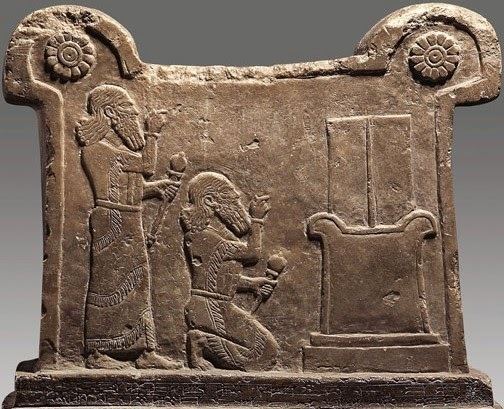
Another dimension for Sargon II-Sennacherib: as Tukulti Ninurta I


of whom (Tukulti-Ninurta I) we have a depiction of him on his knees worshipping the very god Nusku (our “Nisroch”).


Sunday, November 10, 2019

Another dimension for Sargon II-Sennacherib: as Tukulti-Ninurta I

Tukulti-Ninurta I Clio39s Lessons The Middle Assyrian Empire Part 3


by

Damien F. Mackey


“Modern historians judge that Tukulti-Ninurta’s sacking of Babylon with the carrying off
of Marduk’s statue must have been considered sacrilegious by many Assyrians”.

W. G. Lambert

“Turning Babylon into a lake – covering the civilized land with water, returning the city of Marduk to the primordial chaos – was an insult to the god. Sennacherib compounded this by ordering the statue of Marduk hauled back to Assyria”.

Susan Wise Bauer


In a recent, revised version of my article:


I have recalled what I had previously written with regard to different efforts by revisionists to sort out Assyro-Babylonian history.
And I made mention again of a suggestion of Phillip Clapham’s:

“And there have been other attempts as well to bring order to Mesopotamian history and chronology; for example, Phillip Clapham’s attempt to identify the C13th Assyrian king, Tukulti-Ninurta I, with the C8th BC king, Sennacherib.[4] Clapham soon decided that, despite some initially promising similarities, these two kings could not realistically be merged.[5]”
[End of quote]

That was enough for me at the time to abandon any notion that Tukulti-Ninurta I may have been Sennacherib, who is also my Sargon II:

Assyrian King Sargon II, Otherwise Known As Sennacherib


Sargon II and Sennacherib: More than just an overlap


But I have since been struck by the incredible similarities - that must have impressed Clapham also - between Tukulti-Ninurta I and Sennacherib (though I would add Sargon-Sennacherib).

Here are some of these (I am using largely, for Tukulti-Ninurta I, Marc Van de Mieroop’s book, A History of the Ancient Near East ca. 3000-323 BC):


(i)                 Son of Shalmaneser

Tukulti-Ninurta I (1243-07 BC, conventional dates)

Son of Shalmaneser (I)

Sargon-Sennacherib (721-05 – 704-681 BC, conventional dates)

Son of Shalmaneser (V)

(ii)              Hittites and Anatolian revolt

Tukulti-Ninurta I

P. 150: “… attacked the Hittite state from the east, and vassals in the west and south-west of Anatolia rebelled”.

Sargon-Sennacherib

“Evil Hittites without respect for the command of the gods, whisperers of treachery”—these and similar reproaches were hurled by Sargon II's scribes against the peoples of Syria and Palestine who would not submit to the Assyrian yoke, or who having submitted sought relief in rebellion. Sargon's anger marked a crisis in the long but intermittent Assyrian relationship with the Anatolian peoples of North Syria and the Taurus, loosely termed “Hittites”.


(iii)            Invades Babylonia, puppet king(s) installed

Tukulti-Ninurta I

P. 165: “… invaded Babylonia and deposed Kashtiliashu IV … whom he took in chains to Assur. ….
After assuming Babylonian kingship for a short time, Tukulti-Ninurta appointed a series of puppet rulers, who represented Assyrian interests for a decade.

Sargon-Sennacherib

Sennacherib likewise “placed a puppet ruler … by the name of Bel-ibni, in charge at the city of Babylon”. (Paul A. Lindberg, God's Plan of the Ages Volume 4: King Ahaz to Messiah).

“After consolidating his rule over the empire, Sargon was ready to reclaim the lost throne of Babylon. In 710 BC Sargon invaded Babylonia. The fractures and conflicting interests between the polities of the region became visible in the ensuing war when some cities and tribes quickly joined Assyria while others stayed loyal to Marduk-apla-iddina. Eventually, faced with this crumbling of support, the Chaldean abandoned Babylon and its citizens invited Sargon to enter the city (SAA 17 20-21). ….
Once again, an Assyrian king assumed the Babylonian throne. In contrast to his Assyrian predecessors, Sargon remained resident in Babylon for five years, leaving the Assyrian heartland in the hands of his crown prince Sennacherib.
Sargon began the process of properly integrating Babylonia into the empire, following a very different course than his father Tiglath-pileser's laissez-faire policy. For the first time in Assyria's rule over the south, large-scale restructuring was evident. Babylonia was split into two provinces under the rule of Assyrian governors: the province of Babylon comprised the northern part of Babylonia where most of the big cities were located, the province of Gambulu consisted of the Aramaean and Chaldean tribal areas. Under the two provincial governors operated individual city governors, also directly appointed by the Assyrian king, and military commanders based in the Assyrian garrisons securing the region. There was, however, little extensive militarisation.
The Assyrian administration exerted control mainly through an elaborate intelligence system comprised of local informers and Assyrian agents.
Unlike in other provinces, the hierarchical relationships in Babylonia were not clear cut, best evidenced by the fact that Sargon frequently corresponded with and intervened at all levels and various aspects of the administration.
Sargon took the role of king of Babylon seriously. He participated in all major Babylonian festivals, such as the New Year festival (akitu TT ), and restored the region's temples, a traditional duty and privilege of the king of Babylon. Sargon profoundly shaped Babylonian politics by appointing his favoured officials as provincial and city governors and stewards over the most important temples. Their correspondence with the king survives in many cases (SAA 17). As his special envoy to the region, Sargon appointed Bel-iddina [Sennacherib’s Bel-ibni?], a scholar from his entourage whose task in Babylonia it was to oversee the operation of cults and to report directly to the king on the officials in the region. Bel-iddina was the king's eyes and ears amongst his administrators in Babylonia and he acted as an extension of the king's authority”.

(iv)             Faced with a powerful Elamite-Babylonian coalition

Tukulti-Ninurta I

P. 165: “Elamite pressure and a successful Babylonian rebellion returned Babylon to Kassite control, but Elam’s raids eventually led to the collapse of the Kassite dynasty and deposed Kashtiliashu IV … whom he took in chains to Assur. ….

Sargon-Sennacherib

Sargon reacted to this provocation by marching his troops southwards and Merodach-baladan retaliated by joining forces with the king of Elam … Assyria's rival of old. Together they mustered a massive army against Sargon's forces. In 720 BC, the troops met in battle at the city of Der … in the plains east of Babylon …. Although Merodach-baladan's troops arrived too late for active combat, the Assyrian army was pushed back by his Elamite allies and he retained control of the south and the title of king of Babylon.


(v)               Literary tablets seized from Babylonia’s temples

Tukulti-Ninurta I

P. 169: “Tukulti-Ninurta I, for example, after sacking Babylon, took home literary tablets as booty. He may thus have laid the foundation of a royal library in Assyria filled with Babylonian manuscripts”.
Sargon-Sennacherib

“Sargon II … or his successor [sic] Sennacherib … gave an order to a Babylonian scholar concerning … a “writing board of the temples”. …. The order to prepare a list of Babylonian temples might have had administrative reasons … but it could also concern the tablets of the Babylonian temple libraries”.

(vi)             Following his father in deporting nations

Tukulti-Ninurta I

P. 172: “Under Tukulti-Ninurta this practice was extended by deporting north Syrian people to Assyria, where they were set to work on public projects and agriculture”.

Sargon-Sennacherib

“[Sargon II] conquered Samaria and destroyed the kingdom of Israel. Sargon’s inscriptions record that he deported 27,290 Israelites from their homeland and re-settled them to regions throughout the empire from Anatolia across to the Zagros Mountains. In doing so, he was simply following Assyrian political and military procedure …. https://www.ancient.eu/Sargon_II/

(vii)          Building new city on virgin soil

Tukulti-Ninurta I

P. 172: “The military successes provided the economic resources for great building activity in Assyria. The greatest project was the construction of a new capital city by Tukulti-Ninurta, named Kar-Tukulti-Ninurta, opposite Assur on the Tigris river. It was built after he had defeated Babylon, the spoils of that campaign helped provide the means. The city was founded on virgin soil and covered an enormous area, some 240 hectares, if not more”.

Sargon-Sennacherib

P. 251: “… Sargon II … decided to build an entirely new [capital city] on virgin soil, and called it Dur-Sharrukin, “Fortress of Sargon” …”.

“A massive wall of mud brick, 14 meters thick and 12 meters high, surrounds the rectangular site of the city, which covers nearly 300 hectares”. 


(viii)        New city did not last long

Tukulti-Ninurta I

P. 172: “The city’s life as a capital was short, however. After Tukulti-Ninurta was assassinated, it became a place of secondary status”.

Sargon-Sennacherib

“Sargon was killed in battle [sic], and Dur Sharrukin was quickly deserted”.


Part Two:
Tukulti-Ninurta I definitely not Nimrod


“The etymology of the name is uncertain as is also the identification of Nimrod with an historical personality. E.A. Speiser connects him with Tukulti-Ninurta 1 (13th century B.C.E.), who was the first Mesopotamian ruler effectively to have combined Babylon and Assyria under a single authority”.

Jewish Virtual Library


Assyriologist E. A. Speiser is not the only scholar to have thought to identify the biblical Nimrod with Tukulti-Ninurta I. The conventional dating of this so-called ‘Middle’ Assyrian king to the C13th BC does, to some degree, make this a more plausible consideration – at least by contrast with any revised dating for Tukulti-Ninurta I which is always going to be far lower.

However, even a C13th BC date would be a good half a millennium or more too late for the biblical Nimrod.

I would sincerely hope that my quite different location for – and identification(s) of - Nimrod would be both archaeologically and historically more sound than is the suggestion of Speiser and others that he was Tukulti-Ninurta I. See e.g. my article:

Nimrod a "mighty man"


In the following piece on “Nimrod” from: https://www.livius.org/articles/mythology/nimrod/
the author will mention as possible historical candidates for Nimrod, Tukulti-Ninurta I, but also ones that I have suggested (and combined together as the one person) in the above article: namely, Sargon of Akkad and Naram-Sin:

The name "Nimrod" could be applied as a synonym for Assyria. If there is any need to identify this legendary figure with a figure from Mesopotamian civilization, this may well be the heroic god Ninurta, who was a warrior, a hunter, and a founder of human civilization. However, the type of great hero is quite common and there may have many models, even historical kings like the Sumerian Lugal-Banda, the Akkadians Sargon of Akkad and Naram-Sin, and the Assyrian Tukulti-Ninurta I. ....

Increasing the unlikelihood (to my mind, at least) of Tukulti-Ninurta I’s being Nimrod are the striking parallels between Tukulti-Ninurta I and Sennacherib, a late (neo-) Assyrian king, that were uncovered in the first part of this article:

And one could now add to all this the parallel run of Elamite kings for the approximate era of Tukuti-Ninurta I and those of the approximate era of Sennacherib:

C12th BC

Shutruk-Nahhunte; Kudur-Nahhunte; and Hulteludish (or Hultelutush-Insushinak)

with

C8th BC

 Shutur-Nakhkhunte; Kutir-Nakhkhunte; and Hallushu (or Halutush-Insushinak).

But wait, there is more.

What did Tukulti-Ninurta I do when he conquered Babylon?
He installed one Enlil-nadin-shumi on the Babylonian throne.

And when Sennacherib conquered Babylon, he set up his eldest son, Ashur-nadin-shumi, as king of Babylon.

Now, this Ashur-nadin-shumi (= Enlil-nadin-shumi?) will, in turn, become a figure of great and fateful significance, as:

"Nadin" (Nadab) of Tobit is the "Holofernes" of Judith


Sunday, November 3, 2019

Adrammelech and Sharezer murdered king Sennacherib


“One day, while [Sennacherib] was worshiping in the temple of his god Nisroch,
his sons Adrammelech and Sharezer struck him down with the sword and escaped
to the land of Ararat. Then his son Esar-haddon became king in his place”.
 
2 Kings 19:37


Tobit 1:21 collaborates this, but without naming the two regicidal sons:
 
“… two of Sennacherib's sons assassinated him and then escaped to the mountains of Ararat. Another son, Esarhaddon, became emperor and put Ahikar, my brother Anael's son, in charge of all the financial affairs of the empire”.
 
Tobit 1:21
 
 
As far as I (Damien Mackey) am aware, “Sharezer” has not yet been positively identified.
Emil G. Kraeling thinks that: “Sharezer was probably not a son” (“The Death of Sennacherib”, Jstor 53, No. 4, December, 1933, cf. note 32).
 
Thanks to professor Simo Parpola, “Adrammelech” has been identified as one of Sennacherib’s known sons: http://www.gatewaystobabylon.com/introduction/murderersennacherib.htm   
 
 
THE MURDERER OF SENNACHERIB
 
The news of the murder of Sennacherib, King of Assyria, on 20 Tebet, 681, was received with mixed feelings but certainly with strong emotion alI over the ancient Near East. In Israel and Babylonia, it was hailed as godsent punishment for the "godless" deeds of a hated despot; in Assyria, the reaction must have been overwhelmingly horror and resentment. Not surprisingly, then, the event is relatively well reported or referred to in contemporary and later sources, both cuneiform and non-cuneiform, and has been the subject of considerable scholar]y debate as well. In spite of all this attention, however, the most central thing about the whole affair has remained an open question: the identity of the murderer.

While alI our sources agree that he was one of the king's own sons, his name js not known from any cunciform text, and the names offered by the Bible and Berossus, alI of them evidently textually corrupt, have not been satisfactorily explained and are accordingly looked at with understandable suspicion. A theory favored in the early days of Assyriology, according to which these names should be viewed as corruptions of Ardior Arad-Ninlil. a son of Scnnacherib known from a contemporary legal document, has gradually had to give way to an entirely different interpretatjon, according to which the murderer (or at least the mastermind behind the murder) was none but Sennacherib's heir-designate and successor to throne himself, Esarhaddon, who would have been forced to engineer the assassination in order to avoid being replaced by one of his brothers. The weakness of this theory is that it is in disagreement not only with Esarhaddon's own account of the course of events, which puts the blame on his brothers, but also with the traditions of the Bible and Berossus; it also involves a lot of reading between the lines. For these reasons, it has not been universally accepted either, and the case is largely viewed as unsolved for lack of clear-cut, conclusive evidence.
 
In this paper I hope to show that the available evidence is not at alI so elusive as is commonly thought, and actually suffices for determining the identity of the assassin with reasonable certainty. There is a Neo-Babylonian letter, published decades ago, which explicitly states the name of the murderer, and this name is not only known to have been borne by a son of Sennacherib but it also virtuaIIy agrees with the name forms found in the Bible and at Berossus. The text in question, R. Harper, Assyrian and Babylonian Letters (=ABL) XI no.1091 (Chicago 1911), has escaped attention because it was completely misunderstood and mistranslated by its editor, Leroy Waterman; the name has remained unidentified because its actual pronunciation has been obscured by its misleading logographic speIIing. In what foIIows, I shaII analyse both the letter and the name in detail and finaIIy integrate tile new evidence with the previously known facts in a brief reassessment of the murder and its prehistory.
 
The beginning of ABL 1091 is lost. The first three extant lines are fragmentary, but sufficiently much of them remains to suggest that they referred to certain "Babylonian brothers'. of the writer (or writers).lu From line 4' on the text can be foIIowed better. The persons just mentioned gain knowledge of a "treaty of rebeIIion", and subsequently one of them requests an audience with the king. The expression for this is "to say the king's word" which, as shown by J. N. Postgate years ago.l It implies that the person in question applied to the king as the supreme judge and should consequently have been sent directly to the Palace.

This, however, is not what happens in the present case. Two Assyrian officials appear and question the man. Having found whom his appeal concerns, they cover his face and take him away. This, in itself. is perhaps not significant, for ordinary people were not permitted to look at the king face to face. But what foIIows is startling. The man is not taken to the king but to Arad-Ninlil, the very person he wanted to talk about, and (his face stiII covered) is ordered to speak out. Clearly under the i]lusion that he is speaking to the king, he subsequently dec]ares: "Your son AradNinlil is going to kiII you. " Things now take a drastic course.
The face of the man is uncovered: he is interrogated by Arad-Ninlil: and after that he is put to death along with his comrades mentioned in the beginning of the letter. The remaining seven lines are too fragmentary to be properly understood.
 
To bring home the significance of this letter, let me put together some basic facts. The first is that it was clearly the "treaty of rebellion" mentioned at the beginning of the text that induced the unfortunate man to appeal to the king; second, that his information concerned Arad-Ninlil; and third, that because of this information, he and alI his comrades knowing about the "treaty of rebellion " instantly got killed. Accordingly, we may conclude that the assertion "Your son Arad-Ninlil will kill you" was something Arad-Ninlil did not want to become publicly known; and since this statement was meant for the ears of the king, it is evident (1) that the person Arad-Ninlil intended to kill was the king himself and (2) that Arad-Ninlil himself was the king's own son. It follows that AradNinlil was involved in a conspiracy aiming at the murder of the king, and quite obviously was the leading figure in it.
Nowhere in the letter is the name Arad-Ninlil preserved completely; the last sign LÍL is broken away or damaged in alI instances. But no other Sargonid prince with a name beginning with the sign ARAD is known, so the restoration of the final element can be regarded as certain. Since Arad-Ninlil is only attested as a son of Sennacherib, the king referred to in the text can only be Sennacherib.
 
On the other hand. it is clear that the letter itself cannot have been addressed to Sennacherib. Had the writer wanted to warn the king of a threatening assassination, he would have expressed himself differently. Hence, one must conclude that the letter was written after the murder had already taken place, and therefore probably was addressed to Esarhaddon. As this king must. from the beginning, have been reasonably well informed about his father's murder, it would be absurd to assume that the purpose of the writer was simply to inform the king about the identity of the murderer. His aim was certainly different. If we consider the text more closely. it is easy to see that the writer took the leading role of Arad-Ninlil in the conspiracy as generally known: but what he is trying to make clear is that the two officials mentioned in the letter were responsible for the death of the informer and therefore by implication also involved in the conspiracy.Both men. Nabu-sum-iskun and Sillâ. are w.ell known as officials of Sennacherib who continued in their offices through the early years of Esarhaddon: the Kuyunjik letter archiye contains many denunciations against the latter. The present letter clearly is in the same category. and by using as an argument against Sillâ his role in silencing the informer, it actually implies that the prediction "your son Arad-Ninlil will kill you" had become a fact meanwhile.
 
Thus, the letter just discussed powerfully supports the position of the scholars who have seen in Arad-Ninlil the likeliest candidate for the murderer of Sennacherib. and in fact makes it a matter of yirtual certainty. We may hence pass on to a serious reconsideration of the problem of how to satisfactorily relate the name Arad-Ninlil to the names of the murderer (Adrammelech/Adramelos/Ardumuzan) given in the Bible and the BerossuS excerpts.
 
Actually, there is hardly any problem here at all. We are now in a position to show that the traditional reading of the (logographically spelled) Assyrian name, on which the earlier comparisons were based (and which has also been used here for convenience) is incorrect and should be abolished. In particular, the theophoric element at the end of the name (d-NIN.LÍL) has to be read [Mulissu] or [Mullêsu], not *Ninlil. This reading, first tentatively suggested by E. Reiner twelve years ago and since then increasingly well documented, represents the Neo-Assyrian form of the Akkadian name of the goddess Ninlil, attested as Mulliltum in an Old-Babylonian god list. It appears to have been very wide-spread in the first millennium, and is actually attested in syllabic spellings of the very name under consideration. On the other hand, the reading of the first element (ARAD) can be determined as [ arda] or [ ardi] on the basis of occasional syllabic spellings in contemporary and earlier Assyrian texts. And once the reading Arda-Mulissi has been established, the names of the murderer found in the non-cuneiform sources become relatively easy to explain. The Biblical Adrammelech differs from the Assyrian name only in two respects: the metathesis or r and d, and the replacement of shin at the end of the name by kaph.
The former point is negligible since r and d were virtually homographic and therefore easy to confuse in early Hebrew and Aramaic script;26 the second can be explained as a scribal error. It is not difficult to imagine a scribe correcting a seemingly nonsensical "meles" to "melek", a frequent final element in North-West Semitic personal names. The Berossian name forms show an even better match. The form Adramelos found in the Abydenos excerpt is virtually identical with Arda-Mulissi save for the already discussed metathesis of r and d (which may have been influenced by the familiarity of Eusebius with the Biblical form). The name Ardumuzan agrees with Arda-Mulissi up to its last syllable which can only be due to textual corruption. It is important to note that in this name, the metathesis of r and d does not take place.
 
In sum, it can be stated that all three names can be relatively easily traced back to Arda-Mulissi; and "then one comes to think about it. it would be very hard if not impossible to find another Assyrian name "which could provide as satisfactory an explanation for them as this one does. The identification of Arad-Ninliu Arda-Mulissi as the murderer of Sennacherib can thus be considered doubly assured. But "what were his motives, and how did he end up doing what he did? My reconstruction of the course of events is as follows:

In 694, Sennacherib eldest son and heir-designate Assur-nãdin-sumi is captured by Babylonians and carried off to Elam; he is no more heard of. The second-eldest son, Arda-Mulissi, now has every reason to expect to be the next crown prince; however, he is outmaneuvered from this position in favor of Esarhaddon, another son of Sennacherib. This one is younger than Arda-Mulissi but becomes the favorite son of Sennacherib thanks to his mother Naqia, who is not the mother of ArdaMulissi. Eventually, Esarhaddon is officially proclaimed crown prince, and all Assyria is made to swear allegiance to him. However, ArdaMulissi enjoys considerable popularity among certain circles who would like to see him as their future king rather than sickly Esarhaddon. As years pass, the opposition to Esarhaddon grows, while at the same time Arda-Mulissi and his brother(s) gain in popularity. This political development leads to a turn of events, but not to the one hoped for by ArdaMulissi and his supporters. Foreseeing trouble, Sennacherib sends Esarhaddon away from the capital to the western provinces; yet he does not revise the order of succession. In this situation, Arda-Mulissi and his borther(s) soon find themselves in a stalemate. On the one hand, they are at their political zenith while their rival brother has to languish in exile; on the other hand, the latter remains the crown prince, and there is nothing his brothers can do about it since the position of Sennacherib remains unchanged and Esarhaddon himself is out of reach in the provinces. Supposing he were able to score military victories, his popularity would undoubtedly rise while that of his brothers might easily start to sink. The only way for them to make good of the situation, it seems, is to act swiftly and take over the kingship by force. A "treaty of rebellion" is concluded; and probably not much later, Sennacherib is stabbed to death by Arda-Mulissi or, perhaps, crushed alive under a winged bull colossus guarding the temple where he had been praying at the time of the murder. This reconstruction closely follows Esarhaddon's own account of the events. and similar interpretations have been presented earlier by others.